
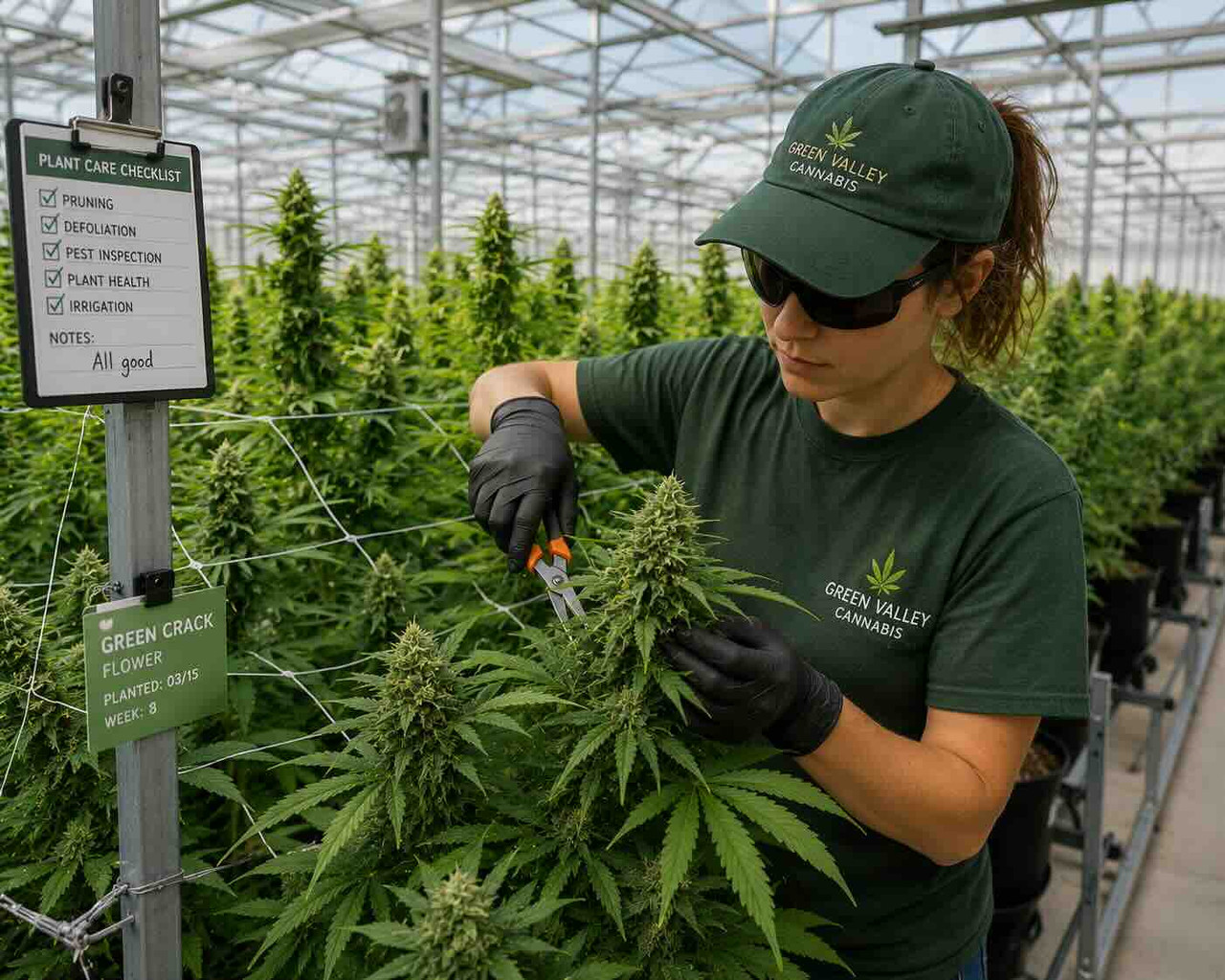
Ask a breeder what separates an average cannabis plant from an exceptional one and resin production will almost always be part of the answer. Resin is where cannabinoids, terpenes, and many of the compounds responsible for a cultivar’s character are produced. While yield often dominates marketing discussions, experienced growers know that a plant covered in dense, aromatic trichomes is frequently far more valuable than a larger plant with mediocre resin production.
As a breeder, I spend countless hours evaluating trichome coverage, resin texture, terpene intensity, and overall flower quality. Some cultivars naturally produce extraordinary amounts of resin, while others focus more heavily on biomass production. Understanding what drives resin production helps growers choose genetics more effectively and create conditions that allow those genetics to reach their potential.
What Makes a Strain Highly Resinous?
Resin production begins with genetics. Trichome density is a heritable trait, which means some breeding lines consistently produce more resin than others. During selection projects, breeders often evaluate hundreds of plants before identifying individuals that combine strong resin production with desirable aroma, vigor, and structure.
The most resinous cultivars usually display heavy trichome coverage not only on flowers but also on nearby sugar leaves. However, quantity alone is not enough. Quality matters just as much. Resin rich in terpenes and cannabinoids is generally more valuable than large amounts of resin with limited complexity.
This is why professional breeding programs evaluate aroma and resin characteristics together rather than treating them as separate traits.
Why Terpenes and Resin Go Hand in Hand
Many growers focus exclusively on cannabinoid content, but resin quality is strongly connected to terpene production. Terpenes contribute aroma, flavor, and much of the distinctive personality that separates one cultivar from another.
In breeding rooms, plants are often selected according to aromatic intensity long before laboratory testing is completed. Strong terpene expression frequently indicates a rich resin profile worth exploring further.
Some of the most memorable cultivars are not necessarily the highest-yielding. Instead, they are remembered because their resin carries exceptional aromatic complexity.
Growers comparing genetics often explore options through ministryofcannabis.com before selecting seed stock. When resin production is the primary objective, stable genetics become particularly important.
Environmental Factors That Influence Trichome Development
Even outstanding genetics require suitable conditions. Resin production is influenced by light intensity, environmental stability, nutrition, and overall plant health.
Healthy plants generally allocate more energy toward secondary metabolite production than stressed plants struggling simply to survive. This is one reason why environmental consistency matters so much.
Light plays a particularly important role. Strong, well-distributed illumination encourages vigorous flower development and supports trichome formation. However, more light is not always better. Excessive stress can reduce overall performance.
Balanced nutrition is equally important. Overfeeding often produces disappointing results because stressed plants rarely express their full potential.
Popular Characteristics of Resin-Focused Genetics
Many highly resinous cultivars share common traits. Dense trichome coverage, strong aroma, vigorous flowering behavior, and substantial terpene expression frequently appear together.
Indica-dominant lines have historically been associated with heavy resin production, particularly those descending from traditional hash-producing regions. However, modern breeding has introduced remarkable resin potential into countless hybrid combinations.
Today, growers can find resin-rich cultivars across a wide range of flowering times, structures, and terpene profiles.
The best breeders focus on selecting plants that combine resin quality with practical cultivation characteristics such as stability, vigor, and environmental resilience.
Common Mistakes When Chasing Resin
The most common mistake is assuming that supplements alone create resin. While nutrition influences plant health, no additive can replace strong genetics.
Another error is harvesting too early. Trichomes continue developing throughout flowering, and premature harvest often sacrifices both quality and quantity.
Growers also sometimes focus exclusively on visual frostiness while ignoring aroma, flower structure, and overall plant performance. Truly exceptional cultivars excel across multiple categories.
Industry developments and cultivation trends can be followed through https://www.cannabisclinic.co.uk, but the fundamentals of resin production remain remarkably consistent: quality genetics, healthy plants, and proper environmental management.
Final Thoughts
The best cannabis strains for resin production are those that combine strong trichome density with rich terpene expression, stable genetics, and reliable cultivation performance.
As a breeder, I have learned that exceptional resin is rarely the result of a single factor. It emerges when genetics and environment work together effectively. Choose proven breeding work, maintain healthy plants, and allow flowers to mature fully. When those elements align, resin production often becomes one of the most impressive aspects of the harvest.