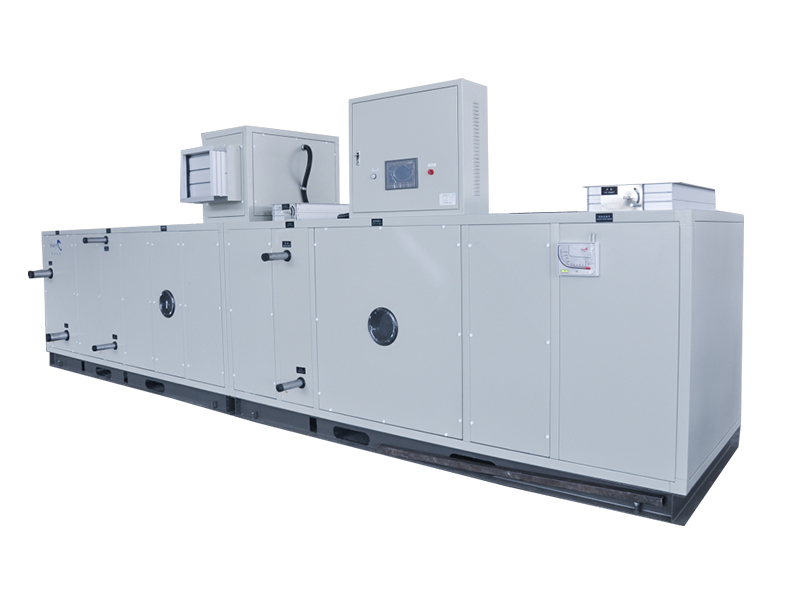
In the apace expanding sphere of atomic number 3 stamp battery manufacturing, dominant situation conditions is material to ensuring production timbre and safety. The sensitiveness of lithium batteries to moisture requires technical facilities, often referred to as dry rooms, where humidity levels are rigorously preserved at low thresholds. These environments keep moisture taint during vital manufacturing processes such as training, cell assembly, and promotional material. Consequently, lithium battery dry room equipment and humidness verify systems have become requirement components in Bodoni battery product lines, sanctionative manufacturers to meet demanding timber standards and optimize public presentation.
The grandness of moisture verify in atomic number 3 battery production cannot be exaggerated. Lithium ions and other reactive materials used in batteries are extremely absorbent, meaning they readily take over wet from the circumferent air. Even token exposure to humidity can put down the battery s chemistry properties, reducing , lifespan, and safety. For this conclude, manufacturers rely on sophisticated lithium battery dehumidification dry rooms that exert extremely low relative humidity levels, often below 1. These environments are carefully engineered to supply horse barn, contaminant-free atmospheres, minimizing the risk of wet-induced defects or hazards such as short circuits or caloric fugitive.
Designing and implementing operational dry suite requires specialized knowledge and trim to the unique needs of lithium stamp battery production. Standard heavy-duty humidness verify systems are often insufficient for maintaining the immoderate-low humidness conditions needed in these environments. This has driven demand for usage Li stamp battery dry suite suppliers who offer made-to-order solutions that integrate on the nose humidness rule, air filtration, and temperature verify. These suppliers work intimately with battery manufacturers to design dry suite that meet particular production volumes, facility layouts, and work protocols, ensuring unseamed integration with present manufacturing processes.
Custom atomic number 3 battery dry suite typically feature extremely effective dehumidification systems, often supported on desiccant engineering science, which can remove wet from the air more effectively than conventional infrigidation methods. These systems are susceptible of maintaining horse barn humidity levels regardless of situation fluctuations, a vital factor in regions with high close humidity. Additionally, high-tech control panels and monitoring systems provide real-time data and mechanization capabilities, allowing operators to fine-tune conditions and quickly react to any deviations that could involve product timbre.
Beyond dehumidification, the plan of these dry suite also emphasizes air . Particulate taint can be evenly damaging to atomic number 3 battery cells, so dry suite often incorporate high-efficiency particulate air(HEPA) filtration to exert cleanroom standards. This ensures that airborne particles do not compromise sensitive materials or step in with difficult assembly processes. The integrating of both moisture and particulate matter verify systems creates a restricted environment that supports the production of high-performance, TRUE Li batteries.
The ontogenesis borrowing of electric car vehicles, inexhaustible vitality storehouse, and outboard electronics has led to an exponential step-up in Li battery demand, which in turn drives excogitation in dry room engineering science. Manufacturers now seek custom lithium battery dry rooms suppliers who can provide climbable solutions to match expanding production lines and evolving industry standards. Flexibility is key, as battery technologies vary in size, chemistry, and sensitivity, necessitating adaptable dry room designs. Modular systems that allow for easy expansion or reconfiguration have become particularly pop, sanctioning manufacturers to set to commercialize demands without extensive or costly renovations.
Energy efficiency is another indispensable thoughtfulness in the plan of lithium battery dry rooms. Continuous surgical process of dehumidification and air filtration systems can consume considerable power, so suppliers more and more focus on on solutions that understate vitality use without vulnerable public presentation. Innovations such as heat recovery systems, sophisticated control algorithms, and high-efficiency components help tighten operational costs and environmental touch, positioning with sustainability goals embraced by many stamp battery manufacturers.
Moreover, safety corpse a top precedency in environments treatment lithium battery materials. Custom dry room designs incorporate features to mitigate fire and explosion risks, including non-sparking materials, appropriate ventilation system, and emergency reply systems. Compliance with International refuge standards and regulations is mandatory, and intimate suppliers check that their equipment and facilities meet all necessary certifications, providing peace of mind aboard work excellence.
In sum-up, Li battery dry room equipment and humidity control systems form the spine of tone assurance in lithium stamp battery manufacturing. The difficult nature of stamp battery components demands environments with precisely restricted low humidity and strip air, realizable only through specialized, custom-engineered dry suite. As the manufacture grows and technologies germinate, the role of usage Li battery dry rooms suppliers becomes more and more life-sustaining, delivering plain solutions that poise demanding environmental requirements, work flexibility, energy , and refuge. For manufacturers aiming to create reliable, high-performance lithium batteries, investment in sophisticated dry room infrastructure is a plan of action imperative mood that supports both innovation and long-term succeeder.