
Online OCR is a powerful technology that converts images of text into editable and searchable digital content. If you have ever taken a photo of a document and wanted to copy the text from it, Online OCR makes that possible. It stands for Optical Character Recognition, and it works directly through a web browser without the need to install software.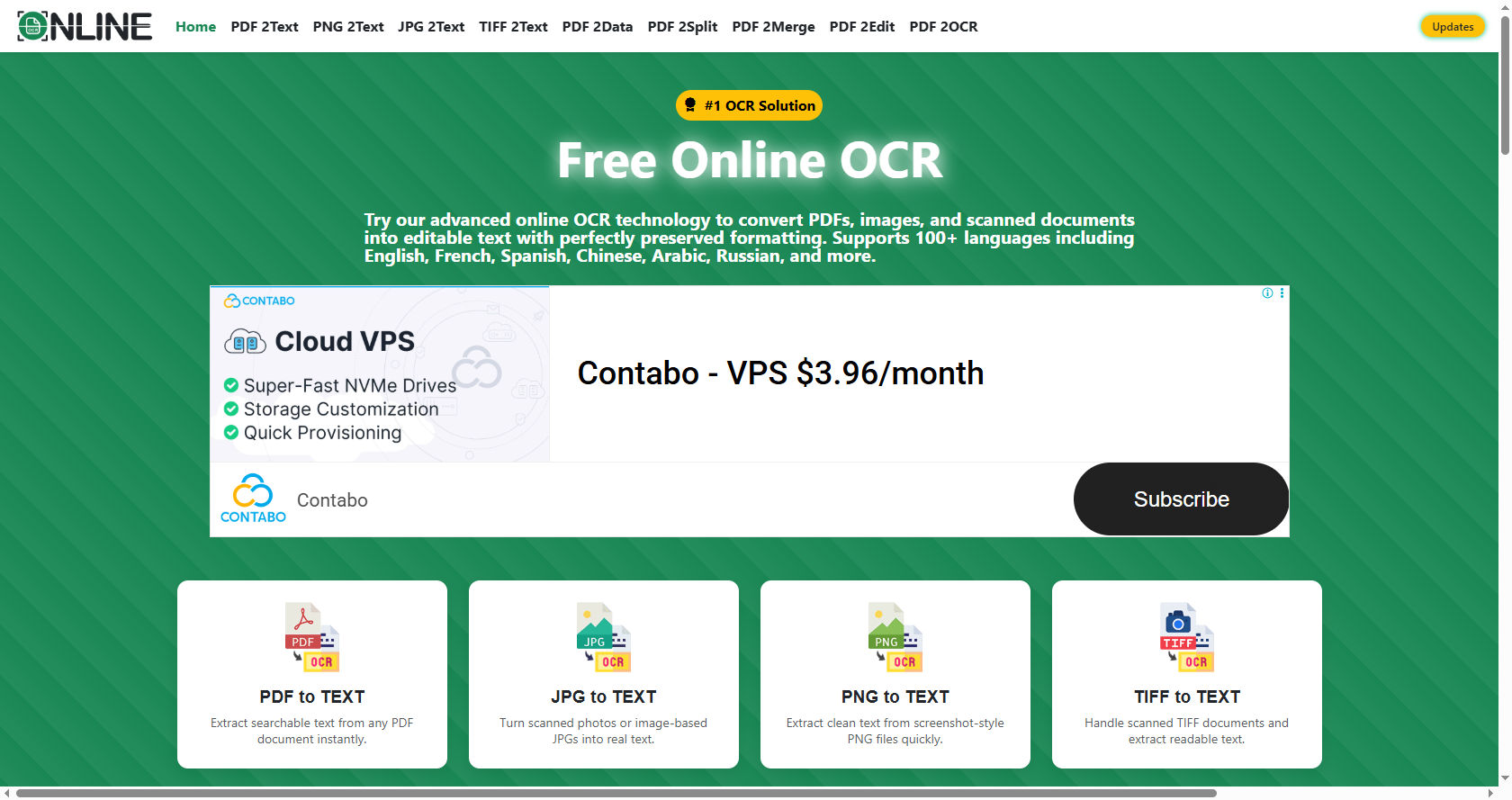
Today, Online OCR is widely used by students, businesses, researchers, and professionals. Whether you are scanning homework notes, digitizing printed contracts, or converting old books into digital format, Online OCR helps save time and effort.
In this comprehensive guide, you will learn how Online OCR works step by step. We will explore the technology behind it, its features, benefits, challenges, and real-world uses.
By the end, you will have a clear understanding of how Online OCR transforms images into text and why it has become so important in the digital age.
What Is OCR Technology?
Before understanding Online OCR, it is important to know what OCR means.
OCR stands for Optical Character Recognition. It is a technology that identifies printed or handwritten characters in images and converts them into machine-readable text. The image can come from:
-
A scanned document
-
A photographed page
-
A PDF file
-
A screenshot
Traditional OCR software required installation on a computer. However, Online OCR allows users to upload files through a web browser and receive converted text instantly.
The main goal of Online OCR is simple: turn visual text into editable text.
The Evolution of OCR
OCR technology has been around for decades. Early systems were limited and could only recognize specific fonts. They struggled with handwriting and complex layouts.
With the rise of the internet and cloud computing, Online OCR services began to appear. These platforms use powerful servers and artificial intelligence to process documents quickly and accurately.
Modern Online OCR uses machine learning and deep learning algorithms. These technologies allow the system to improve over time by analyzing large amounts of text data.
Today, Online OCR can recognize:
-
Multiple languages
-
Different fonts
-
Handwritten text
-
Complex document layouts
This improvement has made Online OCR more reliable and accessible than ever before.
How Online OCR Works: Step-by-Step Process
Understanding how Online OCR works becomes easier when we break it into steps.
Step 1: Image Upload
The process begins when a user uploads a file to an Online OCR website. The file can be:
-
JPG
-
PNG
-
PDF
-
TIFF
Once uploaded, the image is sent to the server where processing begins.
Step 2: Image Preprocessing
Before text recognition starts, Online OCR prepares the image. This step is called preprocessing.
Preprocessing includes:
-
Adjusting brightness and contrast
-
Removing noise or blurry spots
-
Straightening tilted text
-
Converting color images into black and white
This step is very important. A cleaner image improves the accuracy of Online OCR results.
Step 3: Text Detection
After preprocessing, Online OCR identifies areas in the image that contain text.
The system separates:
-
Text blocks
-
Paragraphs
-
Lines
-
Words
It ignores non-text elements like images or decorative graphics.
This step helps the system understand the structure of the document.
Step 4: Character Recognition
Now comes the core part of Online OCR.
The system analyzes each character in the detected text areas. It compares shapes with stored patterns in its database.
Modern Online OCR tools use machine learning models trained on millions of characters. Instead of simple pattern matching, they analyze features like:
-
Curves
-
Edges
-
Spacing
-
Line thickness
This helps the system accurately identify letters and numbers.
Step 5: Post-Processing
After recognizing characters, Online OCR performs post-processing.
This includes:
-
Spell checking
-
Grammar correction
-
Context analysis
For example, if the system reads “1ove” instead of “love,” it can correct it based on context.
Post-processing improves overall accuracy.
Step 6: Output Generation
Finally, Online OCR converts the recognized text into an editable format.
The output may be:
-
Plain text (.txt)
-
Word document (.docx)
-
Searchable PDF
-
Excel file
Users can download and edit the file easily.
The Technology Behind Online OCR
Online OCR depends on several advanced technologies.
Image Processing Algorithms
Image processing helps clean and prepare the document. It improves clarity before recognition.
Common techniques include:
-
Binarization
-
Noise reduction
-
Edge detection
These methods ensure the text stands out clearly.
Pattern Recognition
Earlier OCR systems relied heavily on pattern recognition. They compared letters to stored templates.
Modern Online OCR still uses this concept but in a more advanced way.
Machine Learning
Machine learning allows Online OCR systems to learn from data. The more documents they process, the smarter they become.
They analyze mistakes and improve recognition accuracy over time.
Artificial Intelligence
AI helps Online OCR understand context. Instead of recognizing letters one by one, it understands words and sentences.
This reduces errors significantly.
Types of Online OCR Systems
There are different types of Online OCR systems available today.
Simple Text OCR
This basic form of Online OCR extracts plain text from images.
It works best with:
-
Printed documents
-
Clear fonts
-
High-quality scans
Handwriting OCR
Handwriting recognition is more complex. Modern Online OCR tools use deep learning to read handwritten notes.
Accuracy depends on handwriting clarity.
Layout-Preserving OCR
Some Online OCR tools maintain formatting.
They keep:
-
Columns
-
Tables
-
Images
-
Fonts
This is useful for professional documents.
Multi-Language OCR
Advanced Online OCR supports multiple languages.
It can recognize:
-
English
-
Spanish
-
French
-
Arabic
-
Chinese
This feature is helpful for global users.
Benefits of Using Online OCR
Online OCR provides many advantages.
Easy Access
Since it works in a browser, Online OCR does not require installation.
You can use it from:
-
Desktop computers
-
Laptops
-
Tablets
-
Smartphones
Time Saving
Manually typing text from a document takes hours. Online OCR completes the task in seconds.
Cost Effective
Many Online OCR services offer free plans.
Businesses save money on manual data entry.
Improved Productivity
Students and professionals can focus on important tasks instead of retyping documents.
Common Uses of Online OCR
Online OCR is used in many industries.
Education
Students use Online OCR to:
-
Convert scanned notes into text
-
Extract text from textbooks
-
Create editable study material
Business
Companies use Online OCR for:
-
Processing invoices
-
Digitizing contracts
-
Managing records
Healthcare
Hospitals use Online OCR to digitize patient records.
Banking
Banks use Online OCR to read checks and financial forms.
Accuracy of Online OCR
The accuracy of Online OCR depends on several factors.
Image Quality
Clear and high-resolution images improve accuracy.
Blurry or dark images reduce performance.
Font Type
Standard fonts are easier for Online OCR to recognize.
Stylish or decorative fonts may cause errors.
Language Support
Choosing the correct language setting improves results.
Handwriting Clarity
Neat handwriting increases recognition success.
Modern Online OCR systems can achieve over 95% accuracy with clear documents.
Limitations of Online OCR
Although Online OCR is powerful, it has some limitations.
Poor Image Quality
Low-quality scans lead to errors.
Complex Layouts
Highly designed pages with mixed graphics may confuse the system.
Privacy Concerns
Since files are uploaded online, sensitive documents require secure platforms.
Handwriting Challenges
Messy handwriting is still difficult to recognize perfectly.
Security in Online OCR
Security is important when using Online OCR.
Reliable platforms offer:
-
Data encryption
-
Secure file transfer
-
Automatic file deletion
-
Privacy policies
Always check security features before uploading confidential documents.
Future of Online OCR
The future of Online OCR looks promising.
Advancements in AI and deep learning will improve accuracy.
We may see:
-
Better handwriting recognition
-
Real-time camera OCR
-
Instant translation features
-
Voice integration
As technology evolves, Online OCR will become even faster and smarter.
Tips for Getting the Best Results from Online OCR
To improve results:
-
Use high-resolution images
-
Ensure proper lighting
-
Keep text straight
-
Select the correct language
-
Avoid shadows and blur
These simple steps increase Online OCR accuracy.
Online OCR vs Traditional OCR Software
There are differences between Online OCR and offline software.
Online OCR:
-
Works in browser
-
No installation needed
-
Accessible anywhere
-
Cloud-based processing
Traditional OCR:
-
Requires installation
-
Limited to one device
-
May require updates
Online OCR offers more flexibility and convenience.
Conclusion
Online OCR has transformed the way we handle printed and handwritten documents. It converts images into editable text quickly and efficiently. By using image preprocessing, character recognition, machine learning, and artificial intelligence, Online OCR can accurately extract text from a wide variety of sources.
From education to banking, Online OCR plays a vital role in digital transformation. It saves time, reduces manual work, and increases productivity. Although it has some limitations, continuous improvements in AI technology are making Online OCR more accurate and reliable.
As we move further into the digital world, Online OCR will continue to grow in importance. Understanding how Online OCR works helps us appreciate the technology behind it and use it more effectively in daily life.
Online OCR is not just a convenience tool. It is a bridge between physical documents and the digital future.